Research Areas
Circadian Disruption & Metabolism
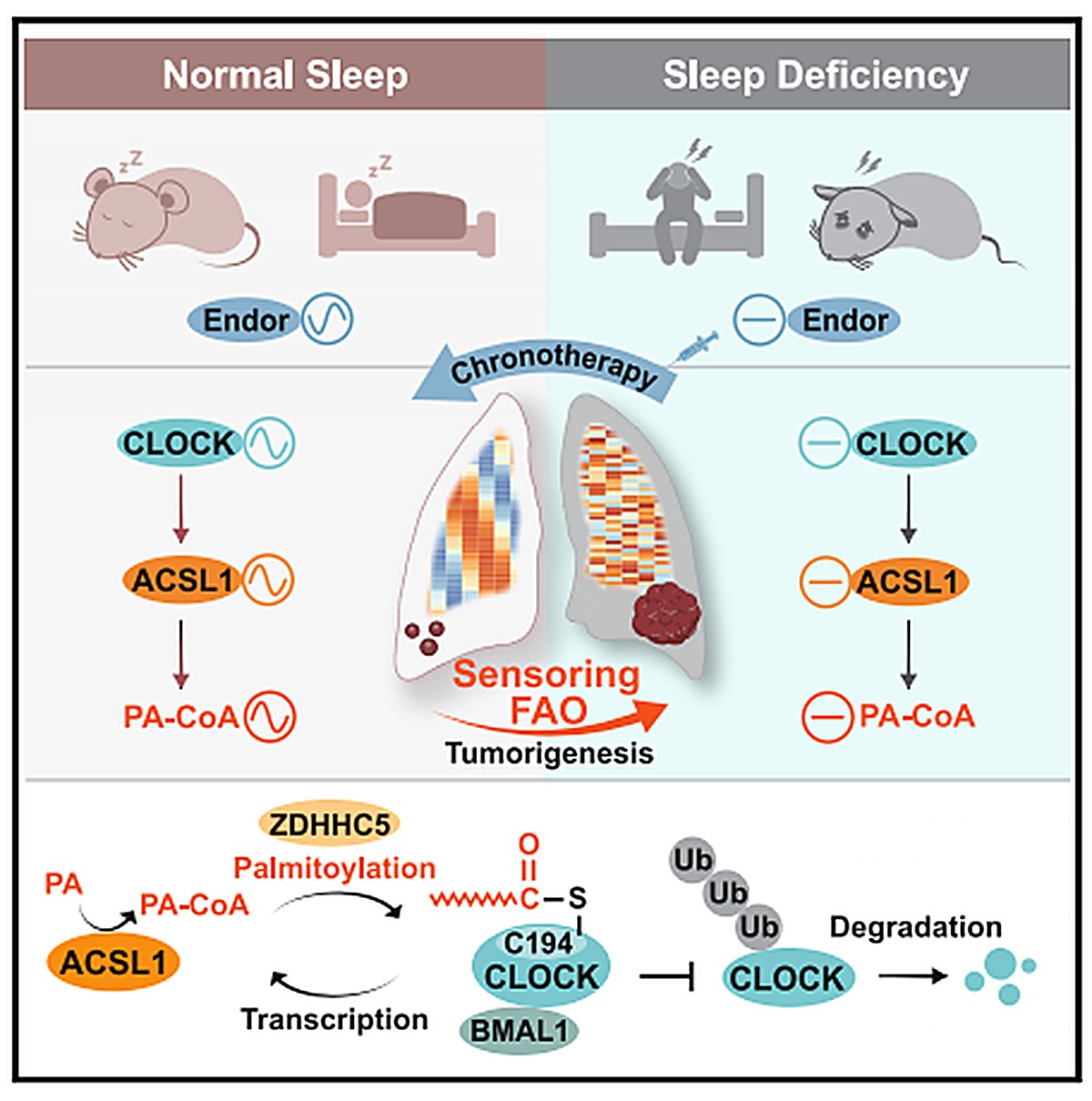
Sleep deficiency disrupts the circadian clock to fuel tumorigenesis through oncogenic metabolism. Circadian disruption dysregulates CLOCK, hyper-trans-activating ACSL1 to raise palmitoyl-CoA; ZDHHC5-mediated CLOCK-Cys194 S-palmitoylation then stabilizes CLOCK against proteasomal degradation, forming a transcription-palmitoylation feedback loop in which fatty-acid oxidation senses circadian disruption to drive cancer stemness. Timed beta-endorphin chronotherapy resets the CLOCK/ACSL1 rhythm and reverses sleep-deficiency-enhanced tumorigenesis.
Mitotic Kinases Remodel the ER
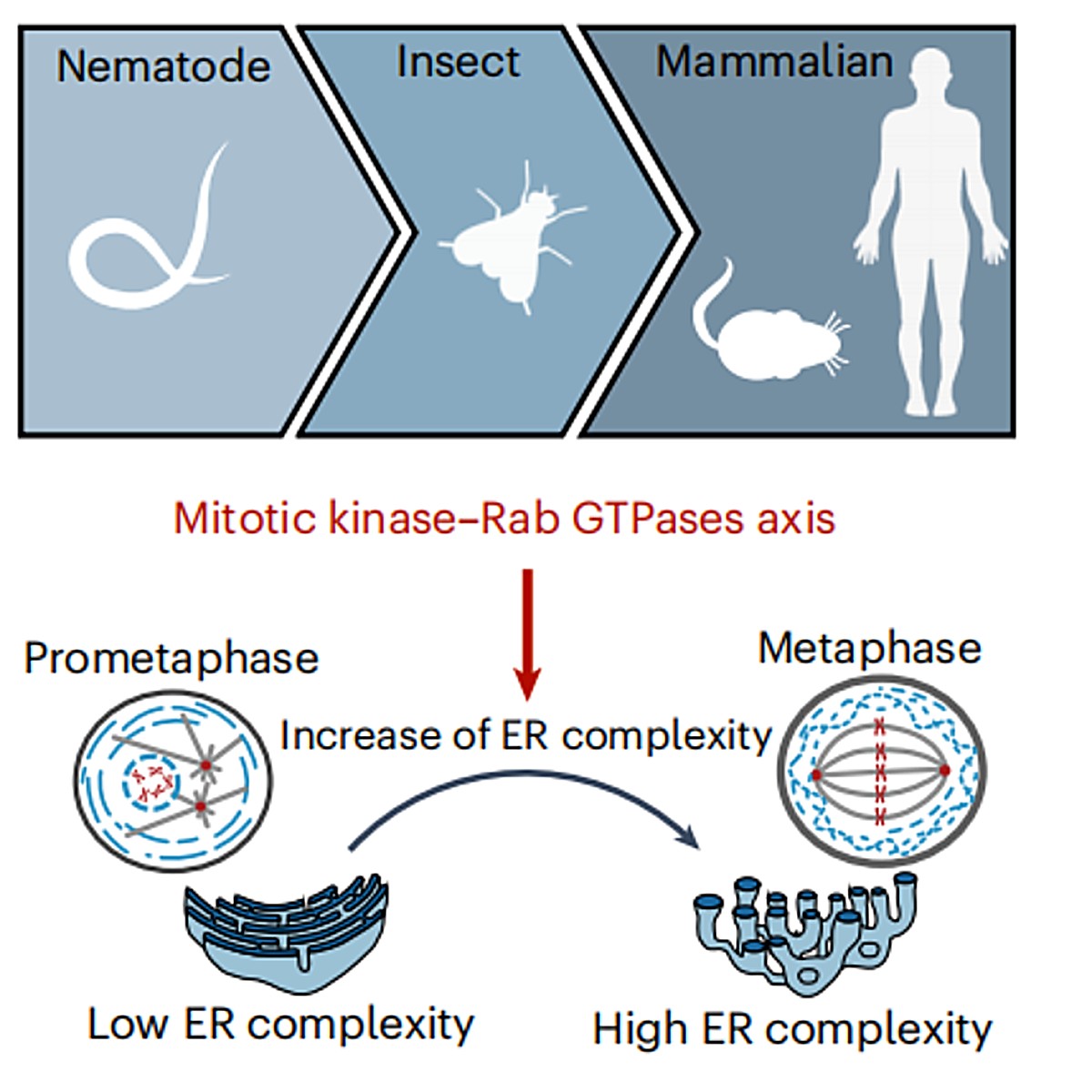
A mitotic kinase-Rab GTPase axis remodels the endoplasmic reticulum during cell division. During mitosis, Aurora kinase A (AURKA) phosphorylates the small GTPase Rab1A at Thr75, locking it in a constitutively active state by blocking GDI binding. ER-retained active Rab1A drives oligomerization of the ER-shaping proteins RTNs/REEPs, increasing ER complexity as cells progress from prometaphase to metaphase. This mechanism is evolutionarily conserved from C. elegans and Drosophila to mammals, revealing how mitotic signaling controls organelle architecture.
Neural Signals & Cancer Stemness
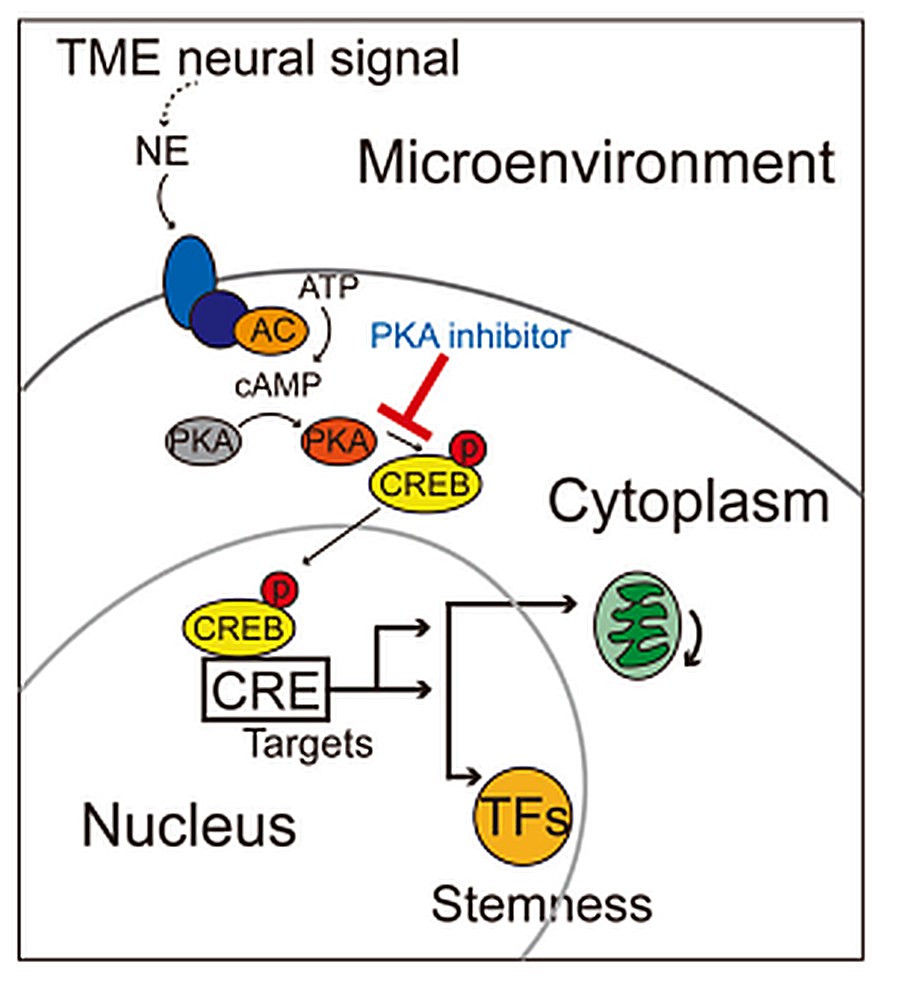
Cancer cells hijack microenvironmental neural signals to acquire stemness. Norepinephrine released by sympathetic nerves activates the cAMP-CRE axis in proximal cancer cells, where ATF1 serves as a conserved hub. Activated ATF1 coordinately trans-activates nuclear pluripotency factors (MYC/NANOG) and mitochondrial-biogenesis regulators (NRF1/TFAM), orchestrating a nucleus-mitochondria collaborative program that establishes a spatialized hierarchy of cancer stemness. We target this neuro-tumor axis to disrupt stemness at its source.
AURKA-m6A-DROSHA Axis
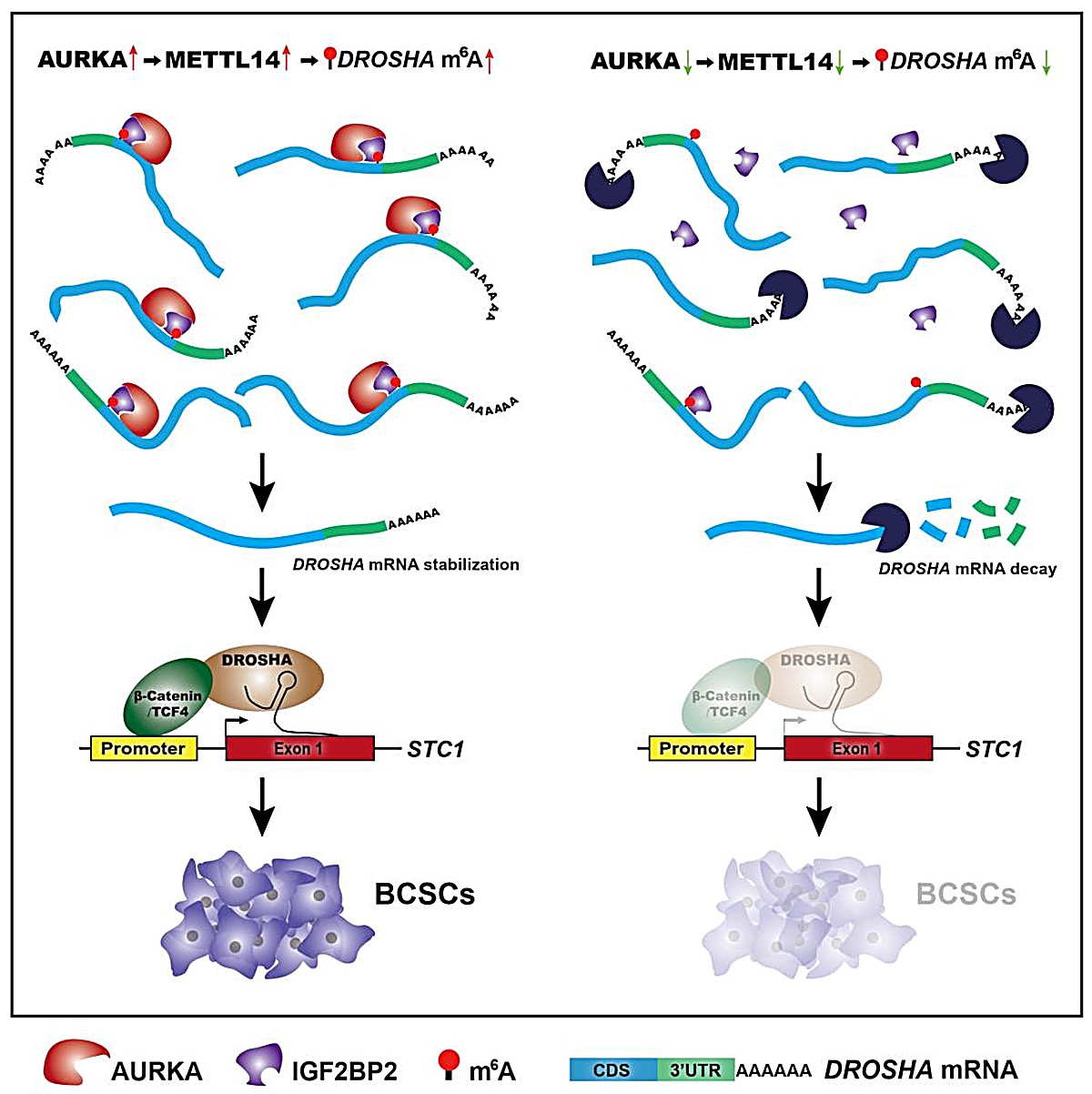
Oncogenic AURKA sustains breast cancer stem-like cells (BCSCs) by rewiring RNA epigenetic modification. AURKA stabilizes the m6A writer METTL14 and, together with the m6A reader IGF2BP2, enhances N6-methyladenosine (m6A) modification of DROSHA mRNA, increasing its stability. Stabilized DROSHA then complexes with beta-Catenin/TCF4 to trans-activate STC1 in an RNA-cleavage-independent manner, maintaining the stem-like state. Disrupting this AURKA-m6A-DROSHA axis attenuates BCSC traits, defining a targetable node in breast cancer stemness.